Your Agent Is Not Forgetful. It Was Never Given a Memory.

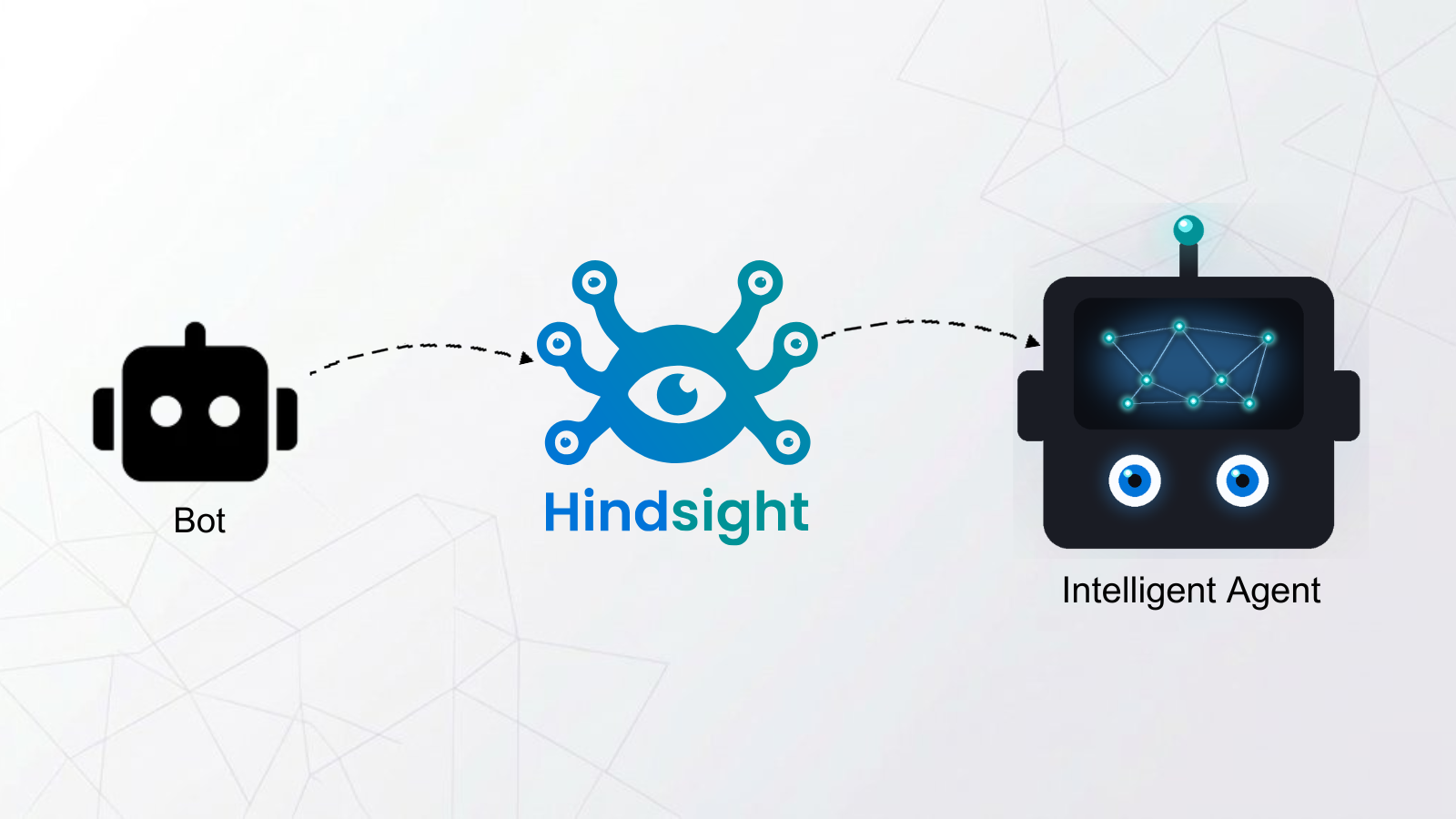
People often describe AI agents as forgetful. That is not quite right. Most agents were never designed to remember in the first place. Each session starts over. Each new conversation arrives with no durable knowledge of what happened before, what the user prefers, what decisions have already been made, or what context should carry forward.
That is fine for one-off prompts. It becomes a real problem as soon as you expect an agent to behave like a persistent collaborator.
TL;DR
- Most AI agents are stateless, each session starts from zero with no learning from past work
- A large context window is helpful, but it is not long-term memory or learning
- Retrieval from documents solves a different problem than learning from conversations, preferences, and decisions
- Without memory, agents feel repetitive, inconsistent, and unable to improve with use
- Real agent learning requires selective retention, relevant recall, reflection across experience, and careful scoping
- Hindsight enables agents to learn from accumulated experience through a simple API and integrations
The Problem
Most people meet this problem through repetition.
You explain your project to an agent. It gives good advice. The next day, you open a new session and explain the same architecture again. You restate the same preferences. You remind it which tools you use, which constraints matter, which tradeoffs you already considered, and which dead ends you do not want to repeat.
The agent is not malfunctioning. It is doing exactly what it was built to do. Session in, session out, it treats each conversation as a new interaction.
That is why current agents often feel impressive in the moment but shallow over time. They can reason inside one context window. They can use tools. They can produce strong outputs. But if nothing durable survives the session, there is no accumulation. No continuity. No memory of the work.
For quick questions, that is acceptable. For anything ongoing, coding, research, support, operations, personal assistance, customer workflows, it becomes friction fast.
Context Windows Are Not Memory
A lot of people try to solve this by giving the model more context.
That helps, up to a point.
A larger context window lets you stuff more tokens into one interaction. You can include more chat history, more documents, more instructions, more copied notes. But that is not the same thing as memory.
A context window is temporary working space. It exists for the duration of the session and then disappears. If you want continuity, you have to keep reloading the same material again and again.
That breaks down quickly.
- Conversations get long, so you compact or summarize them
- Old but important details get dropped
- Users end up manually pasting context from earlier sessions
- Shared context goes stale because nobody updates it consistently
A bigger context window delays the pain. It does not remove the underlying limitation.
Retrieval Solves A Different Problem
Retrieval is valuable, but it is often used as a stand-in for memory when it should not be.
If you index product docs, code, policies, or knowledge base articles and let an agent retrieve relevant passages at query time, you have improved the agent's access to reference material. That is useful. It is also not the same as giving the agent memory.
Why not?
Because a memory system needs to capture things that are not already sitting in a static document.
Examples:
- The user prefers terse answers and hates repeated caveats
- The team already rejected one architecture option last week and why
- A support issue was resolved with a specific workaround that never made it into the docs
- The agent learned that a project uses asyncpg, not SQLAlchemy, during a real work session
- A customer has a launch date next Friday, so conversations this week should optimize for speed, not completeness
Document retrieval helps with known reference material. Memory helps with accumulated interaction history.
You usually want both.
What Real Agent Memory Actually Has To Do
If you want an agent to improve across time, memory needs to do more than store raw transcripts.
A useful memory system has to do at least four things well.
1. Retain what matters
Not every sentence belongs in memory. Good memory is selective.
The system should capture durable facts, decisions, preferences, relationships, and patterns that are likely to matter later. It should avoid retaining every passing tangent or one-off detail that will only create noise.
2. Recall the right things at the right time
Dumping everything back into the prompt is not memory either. It is clutter.
A real memory system needs to retrieve context that matches the current task. If the user is working on deployment, recall deployment context. If they are asking about a customer, recall that customer's history. Relevance matters more than volume.
3. Reflect across accumulated knowledge
Sometimes the useful question is not, "What fact should I retrieve?" It is, "What do we know about this topic after weeks of interaction?"
That requires synthesis. The system should be able to reason over accumulated memories, merge overlapping context, and produce a grounded answer from many prior interactions.
4. Scope memory correctly
One bank for everything is not always the right answer.
Some setups need one bank per project. Others need shared memory for a whole team. Others need strict per-user isolation. If memory is not scoped carefully, it either becomes noisy or crosses boundaries it should not cross. The memory banks reference documents common scoping patterns for different architectures.
That is the difference between a demo and a system you can rely on.
What Breaks When Agents Have No Memory
When memory is missing, the failures are not mysterious. They are operational.
Repeated onboarding
Every session starts with setup work. You re-explain the task, the codebase, the user, the constraints, the tone, the objective.
Inconsistent behavior
An agent follows one convention today and ignores it tomorrow because that prior discussion is gone.
Fragile long-running workflows
A support bot that cannot remember prior interactions is not really handling a relationship. A coding agent that cannot retain project history is not really building on prior work. A personal assistant that cannot remember preferences never becomes personal.
No compounding improvement
The most important loss is cumulative learning. If each session starts from zero, the system never becomes more useful with use. It only becomes briefly useful inside one conversation.
That is why stateless agents often feel better in demos than in daily work. The missing ingredient is continuity.
What Changes When Memory Exists
Once an agent has memory, the interaction model changes.
The user stops thinking in isolated prompts and starts thinking in an ongoing relationship with a system that improves with use.
The difference shows up in small ways first.
- You stop repeating your stack and preferences
- The agent remembers why one decision was made
- It recalls prior experiments before suggesting the same dead end again
- It can answer with context from last week without requiring a manual recap
But the deeper change is capability improvement.
After 2-3 weeks of interactions, a coding agent starts demonstrating real understanding of architectural decisions, naming conventions, and rejected patterns from previous sessions. Not because it memorized transcripts, but because it learned from them. A support agent's response quality visibly improves as it accumulates customer context and patterns. A financial AI's recommendations measurably improve over time; one customer saw 23% better outcomes after three months of accumulated memory compared to a baseline without learning.
This is not persistence. This is learning.
Then it starts to matter at the system level.
A support agent can maintain continuity across customer conversations and improve its recommendations with every interaction. A coding agent can retain architecture decisions and apply lessons learned from earlier sessions to new problems. A voice agent can keep context after the call ends and be better the next time. A team of agents can share one evolving knowledge layer instead of learning in silos.
This is where memory stops feeling like a nice feature and starts feeling like infrastructure.
Why This Matters More As Agents Get More Capable
As agents gain tools, more autonomy, and broader responsibilities, the cost of statelessness goes up.
A simple chatbot can get away with starting fresh. A tool-using agent that writes code, triages tickets, handles operations, or coordinates across systems cannot.
The more work you delegate, the more continuity matters.
Without memory, powerful agents still behave like temporary contractors. They can do impressive work right now, but they do not carry forward what they learned. With memory, they start to behave more like persistent collaborators, able to build on prior context instead of re-deriving it from scratch every time.
That is why memory is becoming a foundational layer for serious agent systems, not just an optional add-on.
How Agents Actually Learn
Learning happens when three things connect: retention, reflection, and application.
When an agent encounters new information, it should retain what matters. When it faces a new task, it should reflect across prior experience to synthesize a better response. When it acts on that synthesis, it applies learning. The next time it encounters a similar situation, that prior learning is available.
This is different from retrieval. Retrieval pulls up past documents. Learning extracts patterns from past interactions, synthesizes understanding, and applies that understanding to new problems.
Real agent learning requires:
- Selective retention of facts, decisions, patterns, and preferences that will matter later
- Synthesis into observations — deduplicated, structured knowledge extracted from accumulated experience
- Reflection that turns observations into mental models — live knowledge that agents can reference and apply
- Application where those mental models shape behavior in new contexts
Without this loop, agents stay static. With it, agents improve measurably over time.
How Hindsight Fits
Hindsight is a learning layer for agents, built around the core insight that memory should enable improvement, not just storage.
Instead of treating memory as a giant transcript store, Hindsight focuses on the mechanisms that make learning possible:
- Retain facts from conversations and workflows into memory banks
- Synthesize those facts into observations — deduplicated, structured knowledge
- Create mental models — live knowledge bases that capture patterns, rules, and insights
- Reflect — agents and skills can query mental models to synthesize better responses
- Scope learning across users, projects, teams, or channels so each context learns independently
Hindsight integrates with your existing agent framework—LangGraph, CrewAI, Pydantic AI, Claude Code, and many others. See the integration guides to add agent memory to your stack.
That can sit behind one agent, or many.
A coding agent accumulates understanding of your project's architecture, conventions, and rejected patterns. Those lessons get synthesized into observations, which populate a mental model about your codebase. Each session, the agent queries that mental model before coding, getting live guidance based on everything it has learned. Over weeks, you notice the quality of code suggestions measurably improves. It is not retrieving documentation anymore; it is learning from your actual usage.
A support assistant carries customer context forward. Patterns from interactions become observations. Those observations populate a mental model of customer needs and solutions. When handling a new ticket, the agent queries this mental model and provides better recommendations based on learned patterns.
A multi-agent setup uses a shared learning bank so one instance benefits from what another already discovered, compressing the learning curve across the whole team.
You can run it with Hindsight Cloud if you want the fastest path, or self-host it if data needs to stay in your own environment.
Tradeoffs And Alternatives
Memory is not free, and it is not always necessary.
If your workflow is mostly one-off prompts with no continuity, a memory layer may be unnecessary overhead. If the data is highly sensitive, you should think carefully about where memory is stored and whether self-hosting is the right choice. The Hindsight quickstart walks through self-hosted deployment options for teams with privacy requirements.
There are also alternatives, each with limits:
- Manual context files are useful, but someone has to keep them current
- Session summaries help, but they flatten details and drift over time
- Document retrieval is essential for reference material, but it does not capture lived interaction history
- Longer context windows reduce short-term pressure, but they do not create durable continuity
These tools are complementary. In practice, the most reliable systems combine them: static docs for stable instructions, retrieval for reference material, and memory for the dynamic layer that accumulates through use.
Recap
- Agents often seem forgetful because they are stateless by default
- Context windows and retrieval are useful, but neither enables learning
- Without memory, agents are repetitive, inconsistent, and unable to improve with use
- Real learning requires selective retention, synthesis across experience, relevant recall, and proper scoping
- As agents become more capable, their ability to learn from experience becomes more important, not less
The core point is simple.
If you want an agent to improve with repeated use, it needs a learning system. Otherwise, every session is a reset and the agent never accumulates understanding. That is not just inefficient; it is wasting the most valuable thing an ongoing agent relationship could provide: improvement through experience.
Next Steps
- Sign up for Hindsight Cloud, the fastest way to add agent memory with no infrastructure
- Read the quickstart if you want to self-host
- Explore the memory banks reference for scoping patterns
- Browse the integration guides to add memory to your existing agents
- If you are deciding between retrieval and memory, start with both; use retrieval for reference material and memory for accumulated interaction history