Building a Hermes Coding Assistant on Windows That Remembers Your Codebase
Nous Research just announced Hermes Agent native on Windows. Here's how to add persistent codebase memory with Hindsight — no Docker, no WSL, PowerShell start to finish.
 By Ben Bartholomew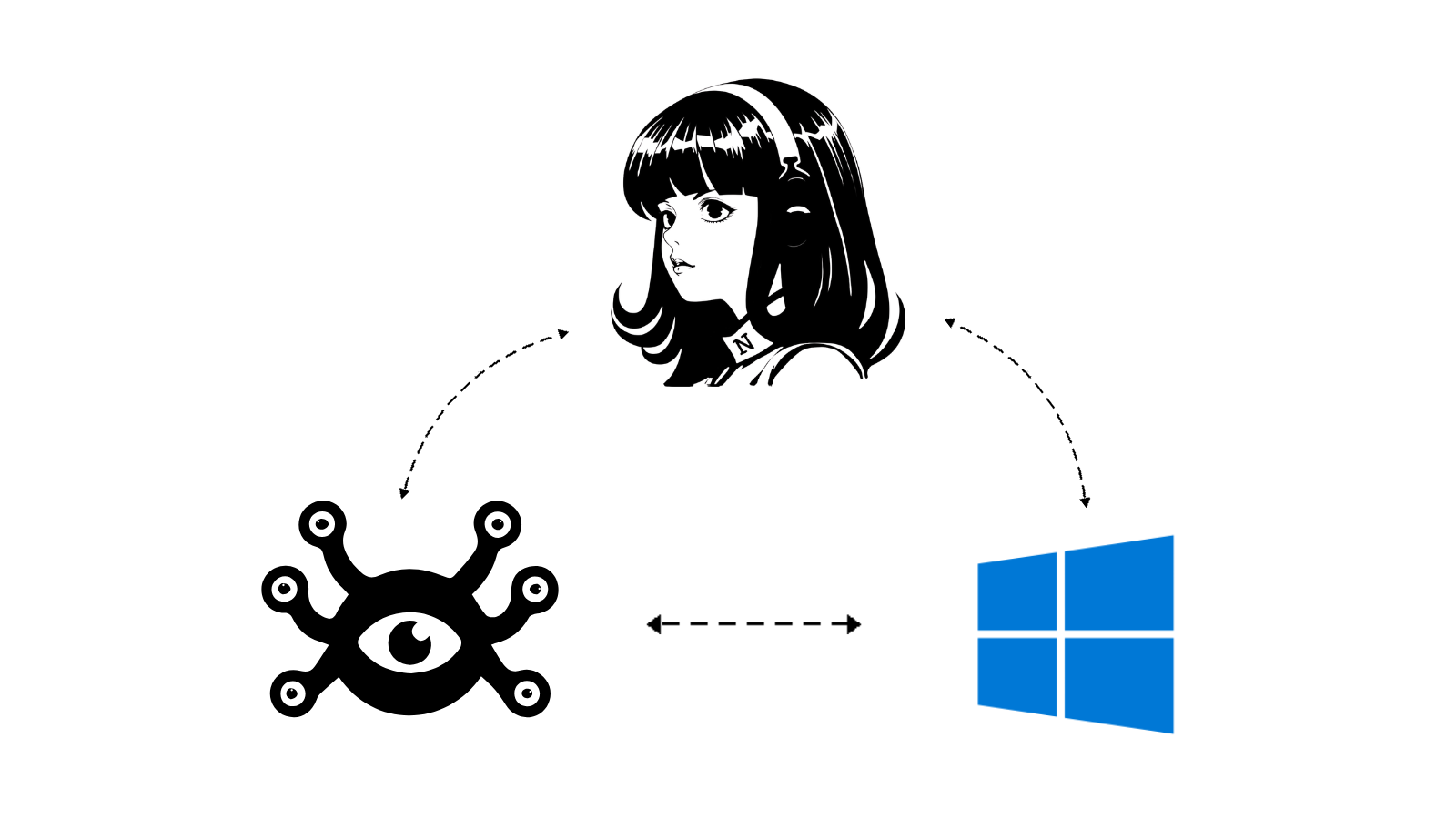
Hindsight is no longer bundled with Hermes. Nous Research moved every memory provider out of the
Hermes core tree, so new installs now run hermes plugins install hindsight before
hermes memory setup. Existing setups migrate themselves. See
What Changes Now That Hindsight Is a Hermes Plugin.
Yesterday, Nous Research announced that Hermes Agent is now natively supported on Windows. Here's how to give it persistent codebase memory.
If Windows is your daily driver, the gap has been real — WSL workarounds, Mac-only binaries, embedded databases that assume bash. Hermes just closed its side of that gap. Hindsight closes the memory side.
Hermes Agent with Hindsight runs natively on Windows. No Docker. No WSL. PowerShell from start to finish. Embedded PostgreSQL handles the storage layer, the daemon spawns as a normal Windows process, and your codebase memory compounds across sessions the same way it does on every other platform.
This post is the Windows-specific companion to Building a Hermes Coding Assistant That Remembers Your Codebase. Same workflow, same compounding memory — different setup steps.
On the Hindsight side, we've been verifying the Windows path for weeks: a daily Windows smoke test runs the full API + embedded Postgres + Python client stack on windows-latest every morning at 06:00 UTC. Now that Hermes is native too, the pair is ready out of the gate.
What You Get on Windows
The full Hermes + Hindsight feature set, native:
- Three deployment modes — pick Cloud, Local Embedded, or Local External in the setup wizard. No Docker, no WSL, no separate PostgreSQL install. Local Embedded ships with
pg0(an embedded Postgres distribution); first boot unpacks the binaries and runsinitdb, subsequent starts are fast. - Auto-recall and auto-retain — every coding session starts with relevant memories injected into Hermes's context, and every session retains what you discussed for the next one.
- Local-only option — when you pick Local Embedded, your memory bank lives in
~/.hindsight/on your machine. Nothing leaves the laptop unless you point it at Hindsight Cloud.
The only Windows-specific gotcha is character encoding (more on that below).
One-Command Setup
There's no Windows-specific install dance. From PowerShell:
hermes memory setup
Pick hindsight from the provider list. The wizard then asks you to choose a mode:
Select mode
↑↓ navigate  ENTER/SPACE select  ESC cancel

→ (●) Cloud           Hindsight Cloud API (lightweight, just needs an API key)
  (○) Local Embedded  Run Hindsight locally (downloads ~200MB, needs LLM key)
  (○) Local External  Connect to an existing Hindsight instance
What each mode asks for:
- Cloud — your
hsk_...token from ui.hindsight.vectorize.io/connect. The default API URL (https://api.hindsight.vectorize.io) is correct — just accept it. - Local Embedded — the wizard downloads and runs Hindsight locally (~200MB on first install, including the embedded PostgreSQL binary). You'll be prompted for an LLM provider (OpenAI, Anthropic, Gemini, Groq, Ollama, etc.), an API key for that provider, and an optional model override. Nothing else to install —
uvxhandles fetchinghindsight-embed, and the daemon spawns automatically. - Local External — point Hermes at a Hindsight instance you're already running (your own server, a teammate's, a self-hosted box). Provide the API URL and, if the instance requires it, an API key.
Confirm it's wired up:
hermes memory status
You should see provider: hindsight and status: ready. On Local Embedded, first boot takes 60–90 seconds while pg0 unpacks Postgres and runs initdb.
What Hermes Remembers on Your Windows Project
Same engine, same extraction. The kind of facts that enter memory automatically after a typical coding session:
"Project targets .NET 8, all new code under src/ uses file-scoped namespaces""PowerShell deployment script fails on long file paths without the LongPathsEnabled registry key""We switched from EF Core lazy loading to explicit Include() chains after the N+1 incident in March""Convention: all async controllers wrap calls in ConfigureAwait(false) — except Razor pages, which don't need it"
You don't tell Hermes any of this. The write pipeline extracts it from your conversation — the questions you ask, the bugs you describe, the decisions you make along the way.
Three Workflows Where It Pays Off
Starting a New Session
Without memory, every session on a complex Windows project starts with context-setting: the .NET version, the SDK, which projects depend on which, the deployment quirks. You burn 10 minutes before any actual work happens.
With Hermes + Hindsight, those facts are already injected. You open with the actual question:
"Help me debug this timeout in the OrderService."
Hermes already knows the project's framework, the convention for async handling, and the deployment configuration. The first message is real work.
Debugging Recurring Windows-Specific Issues
Some bugs only show up on Windows — path separators, line endings, file locking, antivirus interference with build outputs. Without memory, you re-diagnose each one independently.
With memory, when you describe a new failure that smells familiar, Hermes recalls the prior instance:
"MSBuild fails intermittently when Windows Defender real-time protection scans the obj/ directory mid-build — added an exclusion in 2026-03""File lock errors on dotnet publish are usually visual-studio.exe still holding the previous output — closing VS clears it"
These are the facts you'd never paste at the start of a debugging session. They're the ones that save the most time when recalled at the right moment.
Onboarding a Teammate to Your Windows Project
If a teammate joins and you share a bank ID, they inherit your accumulated context immediately. They query Hermes for what it knows:
What do you know about the build pipeline?
What quirks have come up with the Authentication service on Windows?
The answers come from your past sessions — including the Windows-specific gotchas that never made it into the README.
Which Mode Should You Pick?
A quick decision tree:
- Solo dev, want zero ops: Cloud. One API key, no daemon to think about, memory accessible from any machine you log into.
- Solo dev, codebase-sensitive or offline-heavy: Local Embedded. Memory bank stays on your machine, works on flights and air-gapped networks (you still need the network for the LLM call itself).
- Team with a shared Hindsight server: Local External. Point each developer's Hermes at the same Hindsight instance and share a bank ID — institutional codebase knowledge accumulates across the team.
The Hindsight v0.5.5 release added native Windows support for embedded mode, and every subsequent release has been verified on Windows. The v0.4.21 native Windows post has the original walkthrough for running without Docker.
Common Windows Gotchas
A few things to watch for, distilled from the Windows CI runs and user reports:
- UTF-8 encoding — Hermes and Hindsight log status with checkmarks and box-drawing characters (✓, ─, │) that crash Windows's default
cp1252codec. If you see aUnicodeEncodeErroron first run, setPYTHONUTF8=1andPYTHONIOENCODING=utf-8in your PowerShell profile. The Hindsight Windows CI sets both on every run for the same reason. - First-boot Postgres init time (Local Embedded only) — 60–90 seconds on a cold Windows machine while
pg0unpacks Postgres and runsinitdb. Logs land at~/.hindsight/profiles/<profile>.log. - Long file paths — if your projects live deep in the tree, enable
LongPathsEnabledin the registry. Hindsight itself stays under the 260-char limit, but some Python wheel installs don't. - Antivirus on the daemon — Windows Defender occasionally flags the embedded Postgres binary on first unpack. Add
~/.hindsight/to the exclusion list if you hit slow startup or quarantine warnings.
The Longer You Use It, the Less You Explain
Same payoff as on any other platform. Session one, Hermes knows nothing about your Windows project. Session five, it knows the framework, the conventions, the build pipeline. Session 30, it knows the Windows-specific quirks that never get documented but always trip up new contributors.
Hermes just shipped native Windows. Hindsight has been there. Plug them together and your codebase memory compounds on the platform you already work on.
Set it up with hermes memory setup, or start with the Hindsight Windows installation guide.
Further reading:
- Building a Hermes Coding Assistant That Remembers Your Codebase — the platform-agnostic version of this post
- What Is Agent Memory? — foundational concepts
- Hindsight v0.4.21 — Native Windows Support — the original Windows release
- Hindsight v0.5.5 — Windows embedded-mode polish — local pg0 on Windows
- Best AI Agent Memory Systems in 2026 — full landscape comparison